
Working with Dr. Jill McGarry
#7
#7
Responding to a racing mind at night
Responding to a racing mind at night
Responding to a racing mind at night
Learning to step back from thoughts when they start to spiral.
ACT
Post Video Reflection
Post Video Reflection
Notice
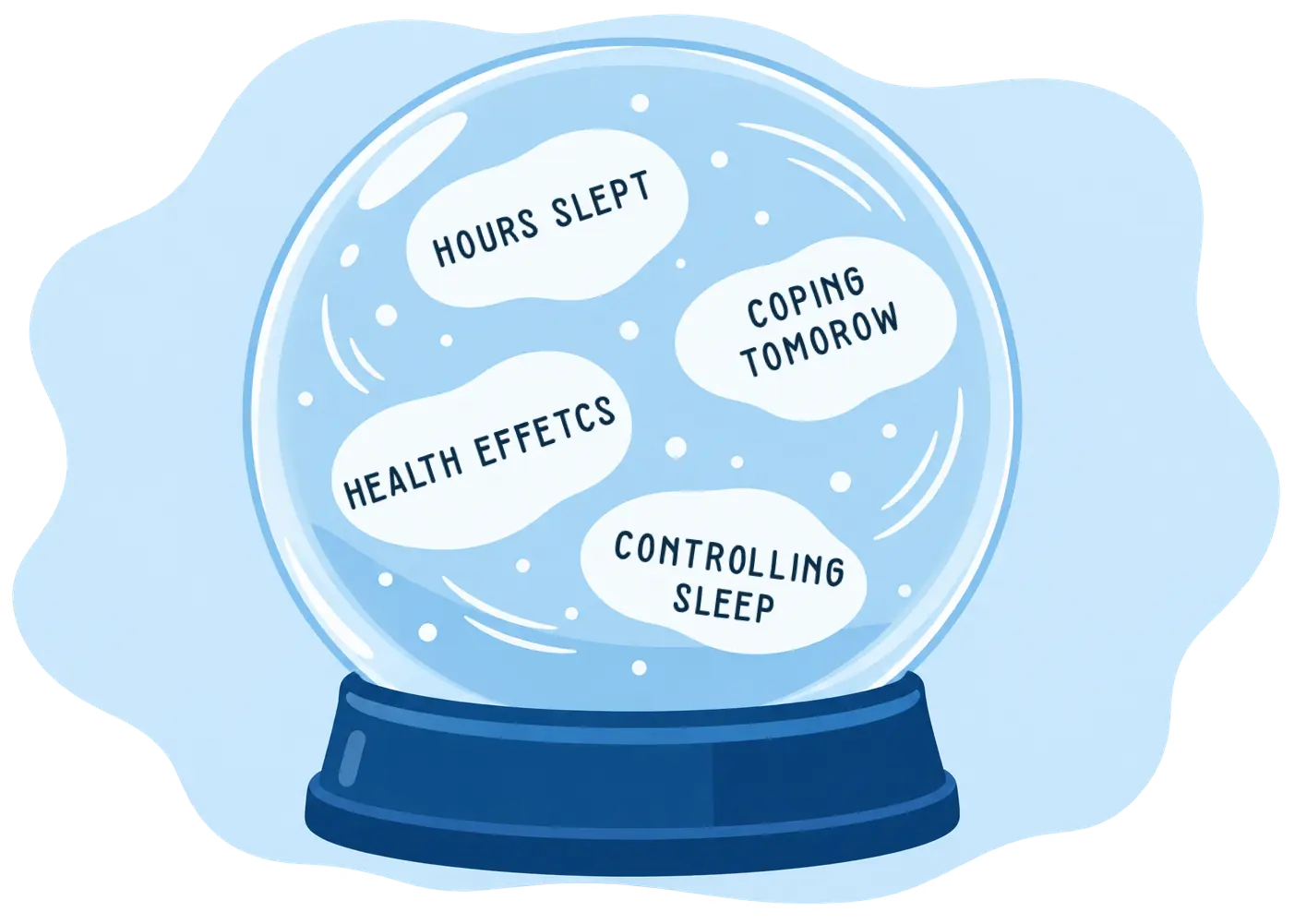
Which category dominates your sleep thoughts: hours slept, health effects of sleep, functioning after hard nights, controlling sleep or something else?
Which category dominates your sleep thoughts: hours slept, health effects of sleep, functioning after hard nights, controlling sleep or something else?
Try
Try
Write down your three most common sleep thoughts and rank them by frequency or intensity. Now give each thought a short category, place that category on a leaf and picture it floating away.
Write down your three most common sleep thoughts and rank them by frequency or intensity. Now give each thought a short category, place that category on a leaf and picture it floating away.
Live
Live
If your mind predicts that you won't function after a hard night, what ordinary meaningful life activities could you still allow yourself to try doing?
If your mind predicts that you won't function after a hard night, what ordinary meaningful life activities could you still allow yourself to try doing?
I've answered these (e.g. in my notebook)
Session Recap
01
Sleep worries can arrive in bed
You may feel sleepy before bed but become mentally alert once your head reaches the pillow. The change is often driven by planning ahead, reviewing the day and monitoring whether sleep will happen.
01
Sleep worries can arrive in bed
You may feel sleepy before bed but become mentally alert once your head reaches the pillow. The change is often driven by planning ahead, reviewing the day and monitoring whether sleep will happen.
02
Sleep worries often follow recurring themes
Common worry themes include how many hours you need, possible health consequences, functioning tomorrow and losing control of sleep. Recognising and naming the theme as it shows up makes a rapid thought easier to identify and give a bit of distance.
02
Sleep worries often follow recurring themes
Common worry themes include how many hours you need, possible health consequences, functioning tomorrow and losing control of sleep. Recognising and naming the theme as it shows up makes a rapid thought easier to identify and give a bit of distance.
03
Noticing is different from challenging
This approach does not require you to prove that a sleep thought is irrational or replace it with a positive one. The first task is simply to recognise what the mind is producing and simply notice the thought.
03
Noticing is different from challenging
This approach does not require you to prove that a sleep thought is irrational or replace it with a positive one. The first task is simply to recognise what the mind is producing and simply notice the thought.
Next Session
Holding difficult thoughts more lightly
Holding difficult thoughts more lightly
A gentler way of responding to overwhelming thoughts when they show up at night.
A gentler way of responding to overwhelming thoughts when they show up at night.
An ACT & CFT based approach helping you to improve your relationship with sleep.
Sluzzle offers educational help for everyday sleep challenges and isn’t designed for medical sleep disorders.
©2026 Sluzzle - All rights reserved. Address: 3rd Floor, 86-90 Paul Street, London, EC2A 4NE
An ACT & CFT based approach helping you to improve your relationship with sleep.
Sluzzle offers educational help for everyday sleep challenges and isn’t designed for medical sleep disorders.
©2026 Sluzzle - All rights reserved. Address: 3rd Floor, 86-90 Paul Street, London, EC2A 4NE
An ACT & CFT based approach helping you to improve your relationship with sleep.
Sluzzle offers educational help for everyday sleep challenges and isn’t designed for medical sleep disorders.
©2026 Sluzzle - All rights reserved. Address: 3rd Floor, 86-90 Paul Street, London, EC2A 4NE